


Oh, my goodness, is there anything better than waking up to the smell of sweet, warm bread sizzling in butter? Nothing says comfort like a huge stack of golden goodness on a slow weekend morning. Forget those floppy, soggy slices you might remember from the diner! As a recipe developer, I’ve perfected this French toast method using everything I know about ingredient chemistry. Trust me, this isn’t just another list of steps; this is the foolproof way to get that glorious, rich, custardy center wrapped in the perfect golden crust. Let’s get cooking!
- Why This Is the Best French Toast Recipe You Will Ever Make
- Ingredients for Classic Custardy French Toast
- Essential Equipment for Making Homemade French Toast
- Step-by-Step Instructions for Easy French Toast
- Tips for Success When Making Classic French Toast
- Serving Suggestions for Your Homemade French Toast
- Storage and Reheating Instructions for Leftover French Toast
- Frequently Asked Questions About Making French Toast
- Understanding the Estimated Nutrition of This French Toast
- Share Your Perfect French Toast Experience
Why This Is the Best French Toast Recipe You Will Ever Make
You might think French toast is foolproof, but there’s real science to making the best French toast that doesn’t fall apart in the pan. Since I spent years behind the scenes perfecting recipes, I can tell you exactly where things usually go wrong. It all comes down to absorption and foundation!
This method ensures you get that beautifully thick, rich flavor you associate with great homemade French toast. We focus on using the right bread—sturdy enough to hold the custard but porous enough to soak up flavor. If you want to know the secret to making breakfast legendary, it’s knowing your ingredients.
The Science Behind Perfectly Custardy French Toast
The magic is in the ratio of eggs to milk. Too much liquid, and you’re steaming the bread instead of frying it! We use just enough to create a velvety coating. That’s why the soak time is crucial; you generally only need about fifteen to twenty seconds per side.
If you let it sit too long, you end up with a soggy mess that tears when you flip it. We want the custard to penetrate the bread slightly for tenderness, but the middle needs to stay bread, not pudding! See, that little bit of food science makes all the difference in your morning. If you need recommendations on the perfect bread, check out my guide to the best bread for French toast.
Ingredients for Classic Custardy French Toast
We aren’t using fancy, hard-to-find items here! This list is short and sweet, but paying attention to the details ensures you get phenomenal French toast every single time. Make sure you’re getting thick slices—about an inch thick if you can manage it. That sturdy base is what lets the custard sink in beautifully without collapsing!
- 6 large eggs
- 1/2 cup whole milk
- 1 teaspoon vanilla extract
- 1/2 teaspoon ground cinnamon
- 1/4 teaspoon salt
- 12 slices thick-cut bread (brioche or challah recommended)
- 2 tablespoons unsalted butter, for cooking
Ingredient Notes and Substitutions for Perfect French Toast
Listen, this is important: using old bread is better than fresh bread! Seriously, grab that loaf that’s been sitting out for a day or two; freshly baked bread dissolves instantly because it’s too moist already. You want that slightly stale texture so it soaks up the mixture perfectly.
Also, if you want to go absolutely decadent with your French toast, you can swap out half of that milk for heavy cream. It gives the batter a little extra body and richness that is just heavenly. It’s a small change that makes a huge difference in the final texture!
Essential Equipment for Making Homemade French Toast
Okay, you don’t need a huge arsenal of gadgets for this classic breakfast. Honestly, most of what you need is probably already sitting in your drawers! Having the right setup just makes the process smoother, especially avoiding that messy drip factor when moving the bread.
First things first, you absolutely need a shallow dish—your mixing bowl should be wide and shallow enough that you can lay a slice of bread flat inside without having to bend it awkwardly. A pie plate works great in a pinch, but a wide, low casserole dish is my go-to.
Next, grab a good whisk. You need sharp, fast action to make sure those yolks are totally beaten into the milk; no one wants a streak of pure egg white in their morning toast! And finally, the cooking surface. I prefer a large, heavy-bottomed griddle or a dedicated non-stick skillet. The bigger the surface, the faster you can work through the batch, and you want to keep that lovely homemade French toast warm!
Step-by-Step Instructions for Easy French Toast
Now that we have our perfect custard mix and the right bread, let’s put it all together. I promise this process is so straightforward, you’ll have your first batch ready in minutes. This is what makes it an easy French toast recipe that you’ll turn to again and again!
Mixing the Custard Base for Your French Toast
You’ll start by tackling that shallow dish. Get your six eggs, the milk, that splash of vanilla, cinnamon, and the tiny bit of salt all in there. Now, whisk! You need to whisk until everything is completely one color—no white streaks of egg white hiding at the bottom. But here’s the key from my professional days: don’t beat it so hard that you create a ton of foam. We want a liquid custard, not a fluffy meringue!
Griddling to Golden Perfection: Cooking Your French Toast
Get your griddle heating up over medium heat. Seriously, medium heat is your friend here. Too high, and the outside burns before the center sets. Add half of your butter and let it melt until it foams slightly. Now, take a slice of your bread and dip it into the liquid. You want to soak it for about 15 to 20 seconds on each side. Don’t just dunk and run! That quick soak is what gives us the soft interior.
Carefully lay the soaked bread onto the hot griddle. We cook it for about three to four minutes on the first side until it’s beautifully golden brown. Flip it gently! Keep an eye on the butter, and don’t be afraid to toss in a little more before you start your next batch. If you need tips on keeping your griddle in top shape, check out my advice on griddle cleaning.

Tips for Success When Making Classic French Toast
Even with a proven recipe, little habits can elevate your morning meal from good to absolutely unforgettable. Because I’ve tested this a million times, I can tell you the minute details that make all the difference when you’re making French toast.
First, let’s talk about the bread thickness again. If your slices are too thin—like standard pre-sliced sandwich bread—they will absorb the custardy mixture way too fast, and you’ll end up with mush. Aim for that glorious, hearty inch-thick cut. It’s the foundation of a truly great breakfast!
Heat management is the second big secret. You have to treat your griddle almost like skin; it needs gentleness. If the heat is too high, the sugar in the custard will scorch before the center is cooked through, giving you bitter spots. Medium heat is non-negotiable! Watch the butter, not just the clock. When the butter melts but doesn’t immediately brown, you’re in the sweet spot.
And finally, if you’re making a huge batch to serve a crowd, don’t just let the cooked pieces sit stacked in a pyramid on a cold plate! They’ll steam themselves soft! I generally set a wire rack over a baking sheet and keep the finished toast warm in a low oven—say, 200°F—while I finish the rest. This keeps the edges slightly crusty while you wait for that incredible maple syrup to drizzle just right.
Serving Suggestions for Your Homemade French Toast
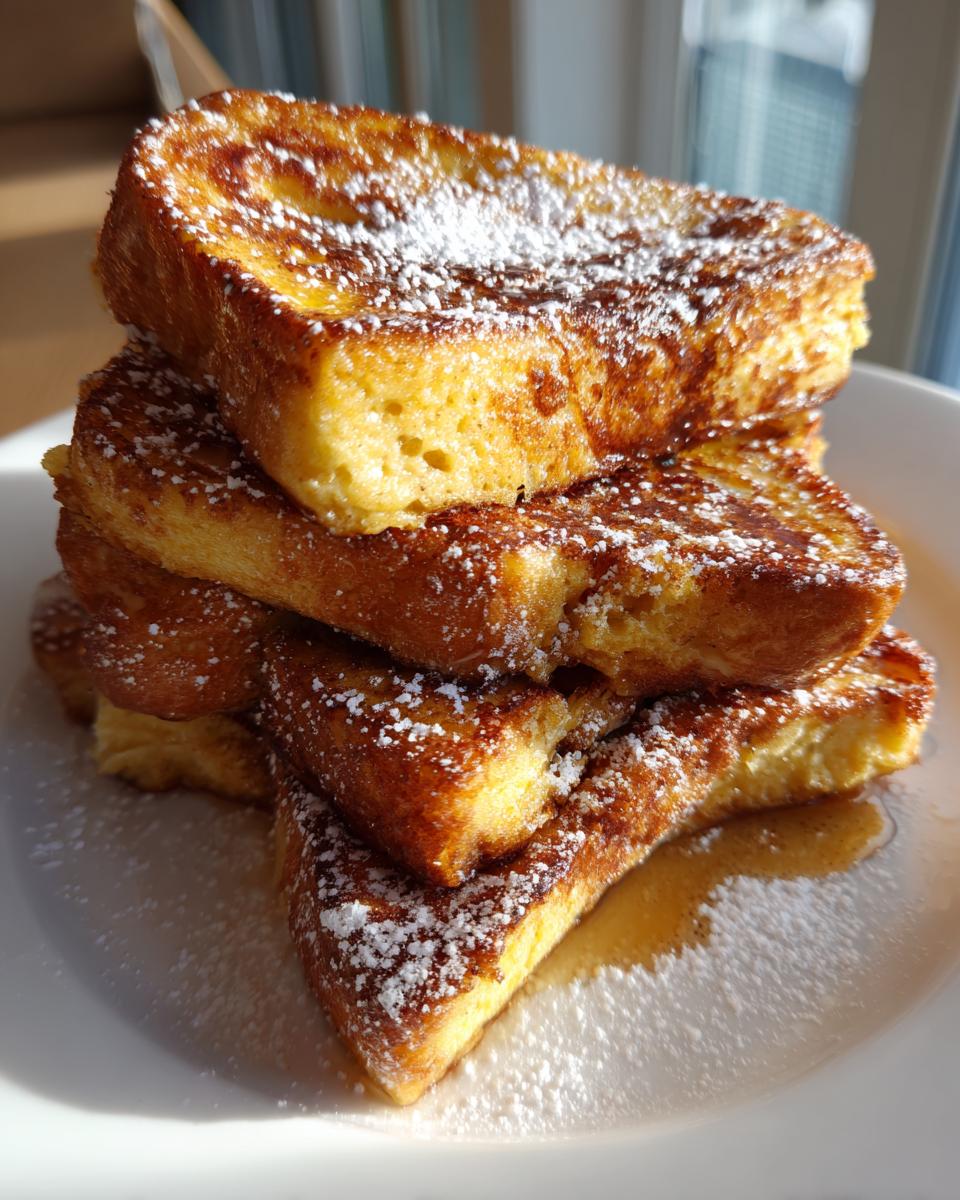
This French toast is already pretty fabulous on its own, let’s be honest, but the real fun comes when you start stacking those golden slices sky-high and piling on the toppings! This is where your classic breakfast recipe turns into a spectacular weekend brunch centerpiece.
You absolutely must start with the basics! A generous dusting of powdered sugar is non-negotiable; it melts just slightly into the nooks and crannies, adding that last little touch of sweetness. And of course, top that pile high with pure maple syrup. If you need to stock up on the good stuff, I have a whole post about my favorite fruit topping recipes that pair perfectly here.
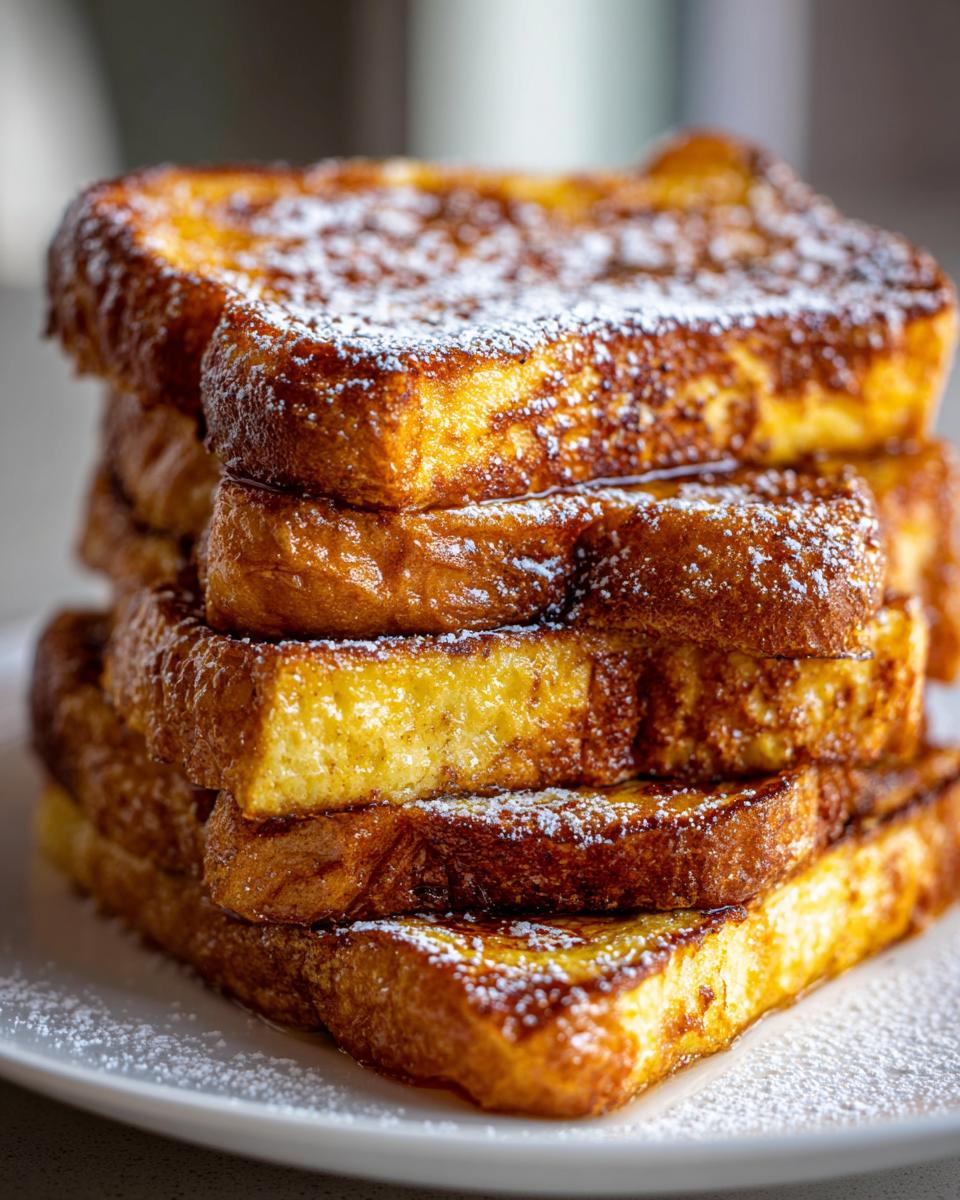
Beyond sugar and syrup, think about texture! A scattering of toasted pecans or walnuts adds a wonderful crunch that plays off the soft interior of the custard toast. Fresh berries—strawberries, blueberries, raspberries—they add color and a little tartness that keeps the sweetness from overwhelming your palate.
If you’re feeling especially fancy, try a dollop of freshly whipped cream alongside a bright, chunky stewed apple compote. It makes the whole experience feel like it came right out of a high-end brunch spot, all made right there in your own kitchen. Isn’t that neat?
Storage and Reheating Instructions for Leftover French Toast
Okay, let’s be real; sometimes you make too much, or maybe you just couldn’t finish that giant stack! The great news is that this French toast reheats like a dream, but you have to treat it gently. We put all that effort into that custardy center, so we don’t want to microwave it into rubber!
If you’re storing leftovers in the fridge, make sure they are completely cooled down first. Place the slices in a single layer between sheets of parchment paper inside an airtight container. Never stack them directly on top of each other while they’re warm, or they’ll steam themselves into a sticky mess overnight. This setup should keep them good for about three days.
For longer storage, freezing is the way to go! Once cooled, layer them with parchment paper just like the fridge method, seal them tight, and pop them in the freezer. They hold up beautifully for about a month. That’s future weekend breakfast sorted!
Now for the reheating, this is where we bring back the crispness. Forget the microwave completely, unless you enjoy hot, chewy sadness! The crisper drawer in your oven or a toaster oven is your best friend here. Preheat your oven to 350°F (175°C). Lay the slices out flat on a wire rack set over a baking sheet. This allows air to circulate underneath, drying out any residual moisture the bread might have absorbed while cooling.
Bake them for about 8 to 10 minutes, maybe 12 if they were frozen. You’ll know they’re done when they are heated right through and feel slightly firm again. This simple method wakes up the texture, giving you that fantastic golden exterior and tender interior without drying the center out. It’s almost like making them fresh!
Frequently Asked Questions About Making French Toast
I get so many questions swirling around about this recipe, which just tells me how many people are trying to nail that perfect breakfast! I’ve rounded up a few of the most common things folks wonder about when they are aiming for truly easy French toast that gets that beautiful, rich custard texture.
Can I use regular sandwich bread for French toast?
You absolutely can, but here’s the catch: regular sandwich bread is thin! Because it’s so thin, it soaks up the egg mixture like crazy. If you use standard, thin grocery store slices, you need to cut that soaking time way down. Instead of 15 to 20 seconds per side, try just a quick 5 seconds total—dip it, flop it, straight onto the griddle! Anything longer and you’ll just end up with sweet, warm mush. Thick-cut brioche or challah truly is superior for that classic custard toast feel, but we make do with what we have sometimes!
How do I prevent my French toast from tasting eggy?
That eggy taste is the fastest way to ruin a good morning, isn’t it? Thankfully, this is entirely manageable, and it ties right back to the technique we used. First, you must ensure you’ve completely integrated the eggs with the milk. If any pocket of just egg sits in the batter, it will taste overpowering when cooked.
Secondly, seasoning is your best friend! The salt we add doesn’t just enhance the flavor; it helps balance out the richness of the yolks. Also, don’t skimp on that vanilla extract. It’s a beautiful aromatic mask that lets the spices shine while covering up any lingering raw egg flavor in your French toast. A good, thorough whisking means you never have to worry about that issue!
Understanding the Estimated Nutrition of This French Toast
I know that for a lot of you out there, figuring out what’s actually going into your breakfast—even comfort food like this—is really important. As a food scientist by training, transparency is just one of those things I can’t skip, even when I’m just sharing my favorite breakfast staples. So, here is the estimated nutritional breakdown for this French toast recipe, based strictly on the quantities listed above.
Remember, these numbers are just a guideline, which is why I always call them ‘estimated.’ Stuff like the thickness of your slice, the exact brand of butter you use, or how much syrup you douse it with afterward can change these figures in a hurry! But this gives you a solid benchmark for two slices of the plain toast.
- Serving Size: 2 slices
- Calories: 280
- Sugar: 12g
- Sodium: 350mg
- Fat: 14g
- Saturated Fat: 7g
- Unsaturated Fat: 7g
- Trans Fat: 0.5g
- Carbohydrates: 26g
- Fiber: 1g
- Protein: 13g
- Cholesterol: 180mg
See? A pretty solid start to your day that gives you a good hit of protein to keep you going until lunch! That’s the beauty of using real eggs and whole milk in the custard—it packs a nutritious punch without tasting like health food. I always feel better knowing exactly what I’m making when I use trusted, foundational ingredients like these.
Share Your Perfect French Toast Experience
Wow, we did it! You now have the secrets to making truly spectacular, custardy, restaurant-quality French toast right there in your own kitchen. I hope that first bite—with that perfectly tender middle and a slightly crisp edge—makes you feel like you’ve won the breakfast lottery!

I put my heart and my years of recipe testing into making sure this method works flawlessly for you. That’s why my absolute favorite part of running this site is hearing from you folks. Did you try the brioche? Did you soak it for exactly 18 seconds? Tell me everything!
I would be so thrilled if you took a moment to let me know how the recipe turned out for you. I honestly live for these updates! Scroll down to the comments section below and give this recipe a rating—five stars if you think it’s the best French toast you’ve ever made! Did you stick to powdered sugar, or did you go wild with whipped cream and berries? I’m always looking for new topping ideas, so please share your favorite ways to dress up this classic breakfast recipe.
And if you’re feeling a little lost on how to structure your feedback or want some behind-the-scenes tips on where to post photos, I put together a little guide to help you out on the commenting section guide. Go ahead, I’m genuinely waiting to read all about your breakfast success stories!
PrintClassic Custardy French Toast

Make perfect, golden French toast with a tender center using this simple, tested recipe.
- Prep Time: 5 min
- Cook Time: 15 min
- Total Time: 20 min
- Yield: 6 servings 1x
- Category: Breakfast
- Method: Griddling
- Cuisine: American
- Diet: Vegetarian
Ingredients
- 6 large eggs
- 1/2 cup whole milk
- 1 teaspoon vanilla extract
- 1/2 teaspoon ground cinnamon
- 1/4 teaspoon salt
- 12 slices thick-cut bread (brioche or challah recommended)
- 2 tablespoons unsalted butter, for cooking
Instructions
- In a shallow dish, whisk together the eggs, milk, vanilla extract, cinnamon, and salt until fully combined. This is your custard base.
- Heat a large griddle or non-stick skillet over medium heat. Add half of the butter and let it melt and coat the surface.
- Dip one slice of bread into the egg mixture, letting it soak for about 15 to 20 seconds per side. Do not over-soak; you want the center custardy, not soggy.
- Place the soaked bread onto the hot griddle. Cook for 3 to 4 minutes per side until golden brown and cooked through.
- Remove the cooked French toast and keep warm while you cook the remaining slices, adding more butter to the skillet as needed between batches.
- Serve immediately with your preferred toppings.
Notes
- Use slightly stale bread for the best texture; it absorbs the custard without falling apart.
- For richer flavor, substitute half of the milk with heavy cream.
- Dust with powdered sugar or drizzle with maple syrup before serving.
Nutrition
- Serving Size: 2 slices
- Calories: 280
- Sugar: 12
- Sodium: 350
- Fat: 14
- Saturated Fat: 7
- Unsaturated Fat: 7
- Trans Fat: 0.5
- Carbohydrates: 26
- Fiber: 1
- Protein: 13
- Cholesterol: 180