

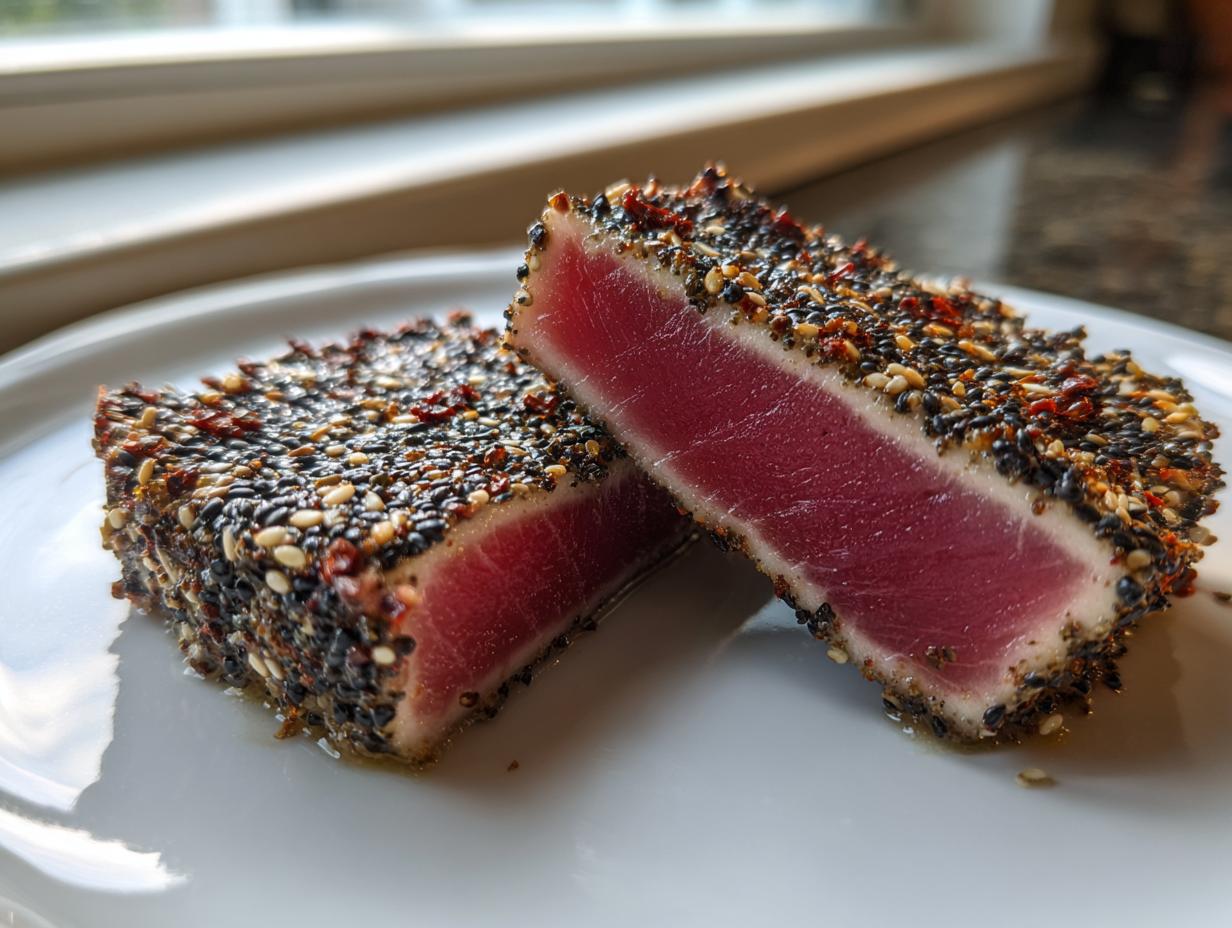
I’m going to let you in on a secret: those gorgeous, crusted **Seared Ahi Tuna** steaks you see at fancy restaurants? You can absolutely nail those on a Tuesday night. Seriously, just five minutes under high heat, and you’ve got something truly gourmet. When I was developing recipes in the test kitchen, I obsessed over the science behind the perfect sear, and that’s what makes this recipe foolproof. It’s all about technique and not being shy with your heat! Because we pay attention to the chemistry—like making sure that fish is bone dry—we get a beautiful crust every single time. And the best part? You’re looking at less than 20 minutes from start to finish. Get ready for a seriously healthy dinner that tastes like you splurged!
- Why This Seared Ahi Tuna Recipe Delivers Gourmet Results
- Essential Ingredients for Perfect Seared Ahi Tuna
- Mastering the Sear: Step-by-Step Instructions for Seared Ahi Tuna
- Tips for Achieving Perfect Seared Ahi Tuna Every Time
- Serving Suggestions for Your Asian Tuna Recipe
- Storage and Reheating Instructions
- Frequently Asked Questions About Seared Ahi Tuna
- Estimated Nutritional Data for This Healthy Dinner
- Share Your Perfect Seared Ahi Tuna Experience
Why This Seared Ahi Tuna Recipe Delivers Gourmet Results
I know you want that restaurant wow-factor without spending an hour fussing in the kitchen, right? That’s exactly what motivated me when I created this Asian tuna recipe. It hits all the marks of a truly premium meal but stays ridiculously simple. Trust me, once you nail this sear, tuna becomes your go-to weeknight hero.
- Restaurant-Quality Crust: We use a specific high-heat trick combined with a flavorful seed coating that locks in the raw, fresh flavor of the center. It looks impressive but takes two minutes!
- Lightning Fast Cooking: Total active cook time is under three minutes. This means you get a wonderfully tender, melt-in-your-mouth interior that you just can’t achieve with thicker cuts of fish. It’s the quintessential quick seafood recipe.
- The Best Ingredients Shine: Because the cooking time is so short, we absolutely need the best foundation—that means only using high-quality, sushi grade tuna. The flavor speaks for itself.
- Incredibly Healthy: This is naturally low in fat and loaded with protein. It’s a fantastic way to feel like you’re indulging in something special while keeping things light and nutritious.
- Maximum Flavor, Minimal Effort: The marinade is bright and savory, packed with ginger and garlic. It deeply seasons the outside before the sear even begins, delivering huge flavor without a complicated sauce.
Essential Ingredients for Perfect Seared Ahi Tuna
When your cooking method is *this* fast—we’re talking maybe 90 seconds per side—you really need your ingredients to be top-notch. They don’t have time to hide any weaknesses! For this recipe, quality isn’t just a suggestion; it’s the whole structure of the dish. If you use sad-looking, watery fish, you’re going to get a sad, steamed result, and nobody wants that. We need robust flavors that hold up to intense heat!
I insist on using proper, thick-cut **yellowfin tuna** steaks for this. You want something substantial, often labeled as **sushi grade tuna** at your fish counter. That designation tells you it’s been handled properly for eating raw in the center. And trust me, you want that raw center!
Here’s what you need to gather up. Keep everything measured out beforehand because once that pan gets hot, things move fast!
- Two beautiful 6-ounce steaks labeled as sushi-grade ahi tuna.
- A good splash of sesame oil—it’s the foundation of that Asian flavor.
- Soy sauce or tamari for that salty punch.
- Fresh ginger—don’t you dare use the dried powder here; fresh ginger is a game-changer!
- One clove of garlic, minced very finely.
- A nice mix of black and white sesame seeds—this is what creates that spectacular crust.
- Just a tiny pinch of salt and pepper to season once they’re coated.
Ingredient Notes and Substitutions
Let’s talk about sourcing because this is where many people get nervous. You absolutely must ensure your fish is designated **sushi grade tuna**. If your fishmonger looks confused, ask to speak to someone else or find another shop. This isn’t like buying cod; this fish is going to be raw in the middle, so safety matters! I usually stick to yellowfin since it’s readily available and holds its shape so well when seared.
Now, for substitutions, because I always hear about folks needing flexibility: if you have celiac disease or just prefer to cut down on gluten, you can seamlessly swap out the regular soy sauce for tamari. The flavor profile is incredibly similar, and it works just as well in that flavorful little marinade brush-on. Don’t try to skip the ginger or the sesame seeds, though—those are non-negotiable if you want this specific **Asian tuna recipe** flavor profile!
Mastering the Sear: Step-by-Step Instructions for Seared Ahi Tuna
Okay, we’ve got our gorgeous yellowfin tuna steaks ready and our Asian flavor paste mixed up. Now comes the part that actually turns simple fish into a spectacular meal! This technique requires speed and confidence, but don’t panic—that’s why I developed these steps to be so straightforward. We are aiming for that perfect temperature contrast: piping hot, crunchy outside giving way to a cool, buttery inside. Remember, this whole cooking process takes less time than boiling water, so have everything ready before you even think about turning on the stove!
Preparation Steps for the Best Seared Ahi Tuna Crust
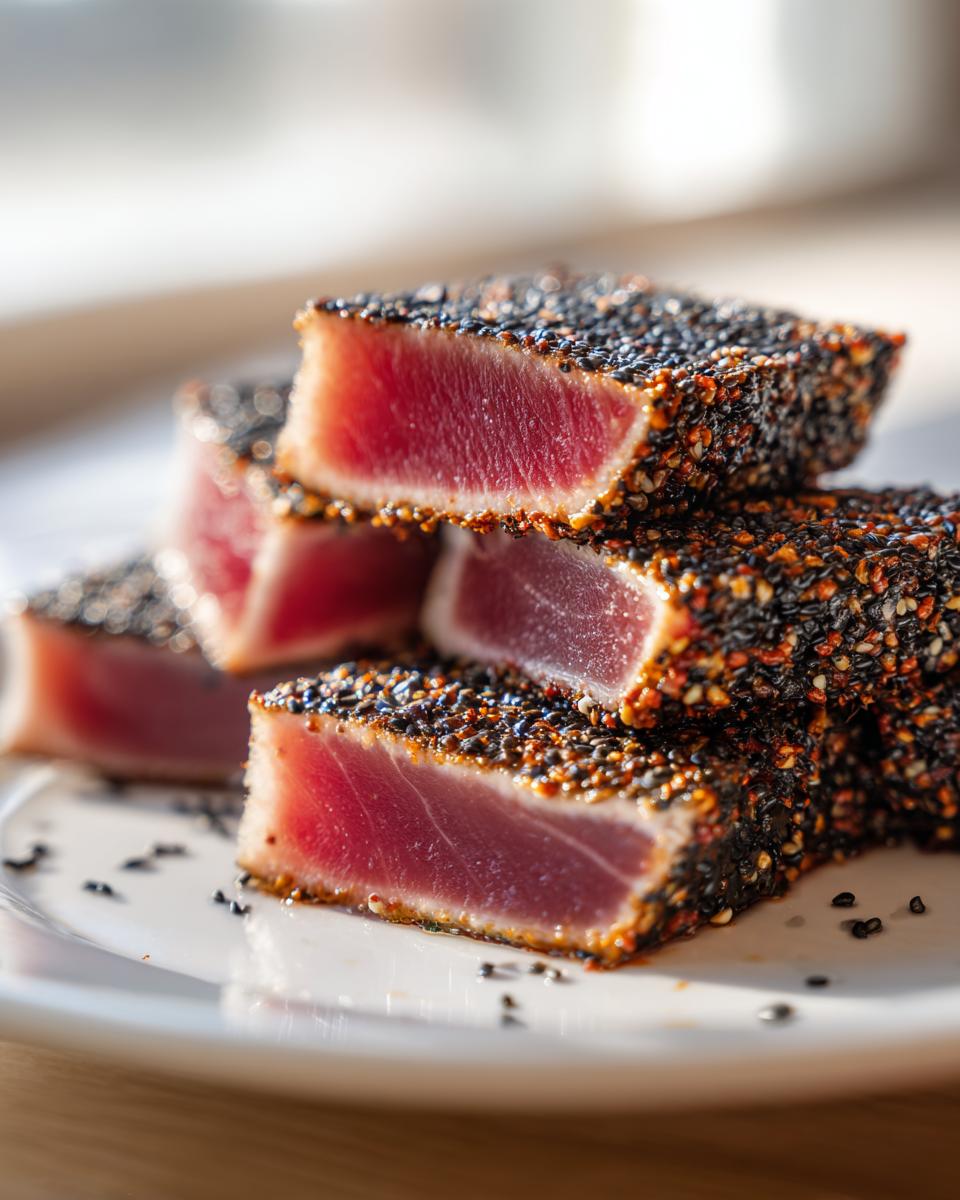
The very first step, and I cannot stress this enough, is drying your tuna. Grab a wad of paper towels and just press, press, press onto those steaks until they feel noticeably dry to the touch. Scientifically speaking, water turns to steam when it hits hot oil or, in our case, a hot pan. If your tuna is wet, the pan cools down instantly, and you end up steaming your gorgeous fish instead of searing it! Once dry, brush on that delicious ginger-garlic mix. Then, the fun part: pressing both sides firmly into that plate of sesame seeds. Make sure those seeds stick well all around the perimeter!
The High-Heat Searing Technique
Time to put on the heat! Get your cast iron skillet—trust me, a heavy pan is essential here for holding temperature—and let it get screaming hot on high. When you think it’s hot enough, wait another minute. Seriously! I link to my favorite cast iron care tips elsewhere, but right now, just get it ripping hot. Carefully lay the crusted tuna in the dry, hot pan. We only cook these for a very short window—think 60 to 90 seconds per side if you want that perfect rare edge. If you cook it too long, it loses that luscious texture! Once you flip them, do the other side for the exact same time.
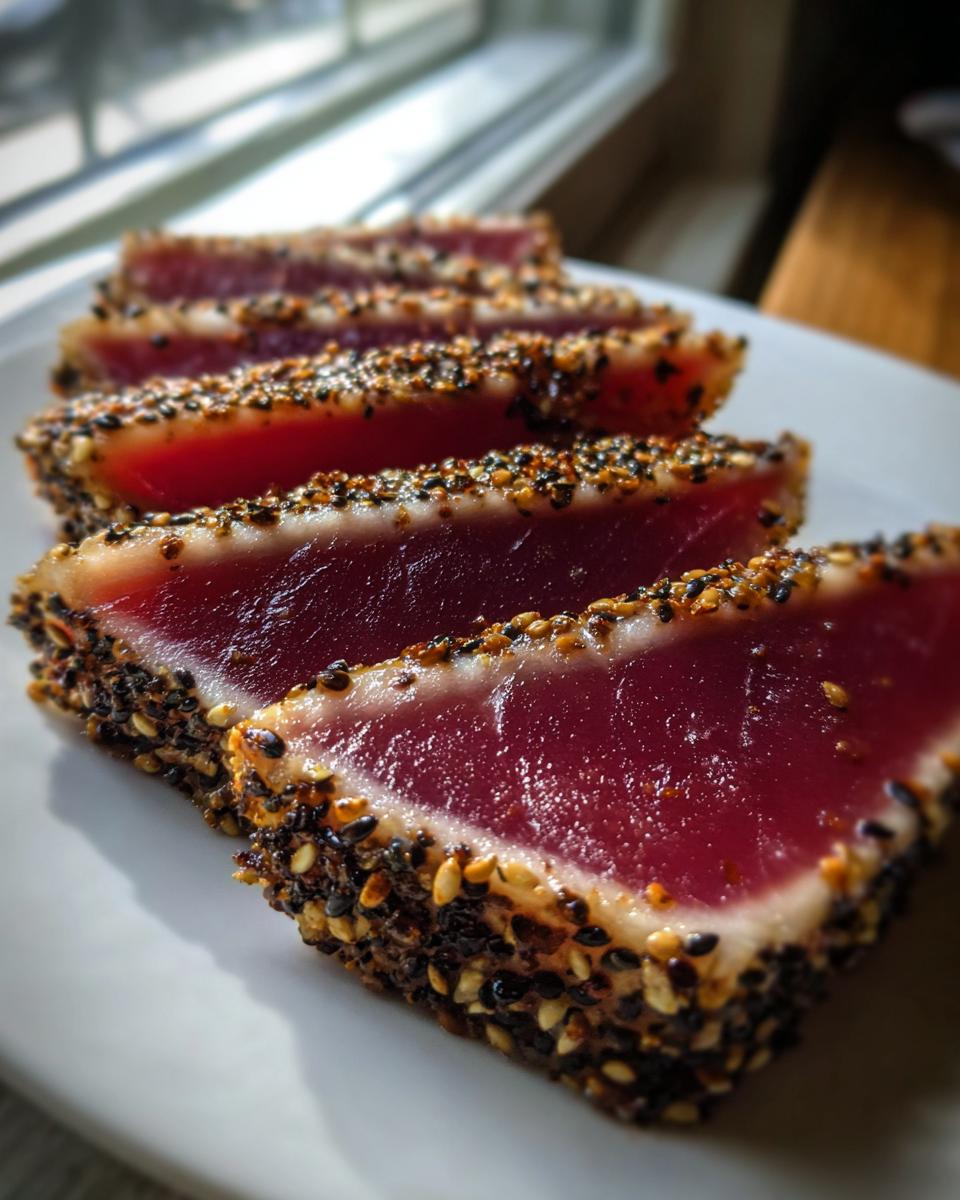
The last little trick after they come out of the pan? You must let them rest! Take them out immediately and place them on a cutting board for five minutes. This lets those juices redistribute. Then, slice them cleanly against the grain into half-inch pieces. That rest is almost as important as the sear itself!
Tips for Achieving Perfect Seared Ahi Tuna Every Time
I learned so many hard lessons developing reliable recipes back in my professional days, often by completely messing up a gorgeous piece of fish! I remember one time I thought I could multitask while searing tuna. Big mistake! I walked away for maybe an extra 30 seconds per side, and when I went to slice it, the beautiful pink center had turned into a dull, opaque gray ring about an inch thick. It was edible, sure, but it tasted like rubber! That’s when I truly internalized the importance of constant attention when dealing with quick-searing proteins.
My biggest pro-tip, which comes directly from understanding the science of heat transfer, is always about getting that pan hotter than you think you should. You are creating a thermal barrier almost instantly. Cast iron is my absolute favorite tool here because it retains heat so well. If the pan isn’t hot enough, the fish sits there slowly warming up instead of achieving that instant crust we’re looking for.
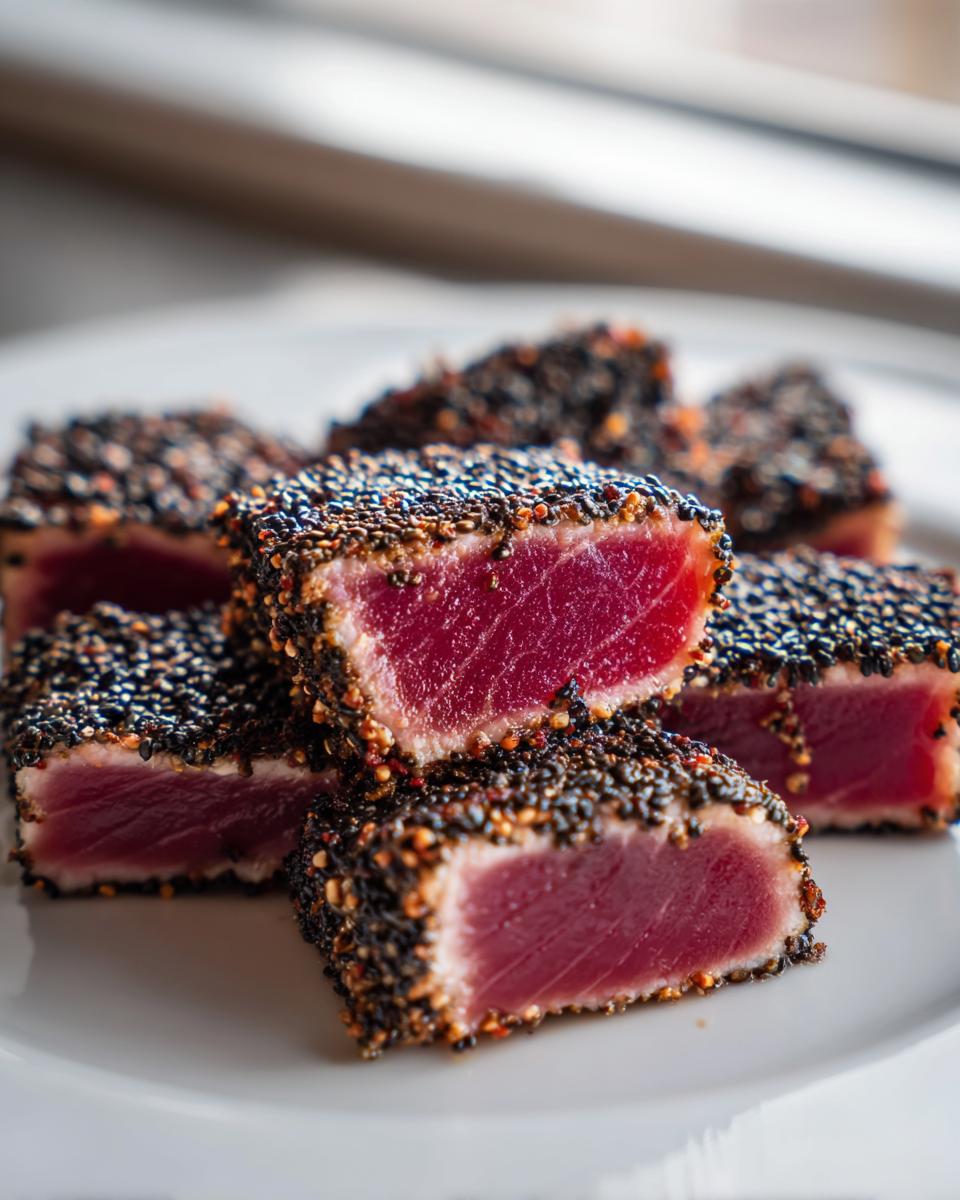
Another crucial technique, which is easy to overlook when you are excited to eat your gourmet tuna, is how you slice it afterward. You must slice against the grain. Look closely at the muscle fibers running through that piece of fish—they look like little parallel lines. You want to cut perpendicular (across) those lines. This breaks up the fibers, and suddenly, that already tender fish becomes miraculously easy to chew. If you slice *with* the grain, you end up with long, stringy, slightly tough pieces even if the internal temperature is perfect.
Finally, respect that five-minute resting period I insisted on earlier. It feels like forever when you smell that amazing sesame crust, but letting those juices settle in the center is what keeps the raw interior moist and prevents all that flavor from bleeding out onto your cutting board the second you slice into it. Patience for five minutes buys you perfection!
Serving Suggestions for Your Asian Tuna Recipe
Wow, you’ve made this incredible, perfectly seared ahi tuna—it smells amazing, right? Now comes the fun part: figuring out what delicious vehicle will get this amazing protein into your mouth! Since this is such a clean, savory, and quick seafood recipe, you really want sides that complement that bright sesame-ginger flavor without overwhelming it. I’ve got a few go-to pairings that always elevate this dish from a simple weeknight meal to something that feels truly special, like a real gourmet tuna presentation.
I love playing with contrasting textures. The tuna is soft and crusted, so pairing it with something creamy or something crunchy makes every bite interesting. If you’re looking for something warm and comforting, don’t even think about plain white rice. Try making a small batch of jasmine rice, maybe with a tiny drizzle of lime juice mixed in after it steams. That slight acidity is so refreshing against the rich sesame oil.
Creamy Sides That Contrast the Sear
If you want something truly decadent that still feels healthy because the tuna itself isn’t loaded with fat, you have to try wasabi mashed potatoes. You treat your mashed potatoes exactly as you normally would, but right at the end, before you fluff them up, you stir in a teaspoon or two of wasabi paste and a splash of milk or cream. It gives you that creamy, dreamy texture but with a spicy kick that absolutely sings with the sear from the tuna. It’s unexpected, but people always ask for the recipe!
Another excellent creamy choice is avocado slices, maybe lightly fanned out on the plate. The healthy fats in the avocado echo the richness of the yellowfin tuna perfectly. Think of it as a deconstructed sushi bowl! When I plate mine this way, I always sprinkle a tiny bit of black sesame seeds over the avocado just to tie the garnish together.
Light and Bright Counterpoints
For those warmer evenings, or if you’re trying to keep things super light, you cannot go wrong with a crisp Asian slaw. I usually just shred up some purple cabbage, carrots, and thinly slice some scallions. The dressing needs to be light—think rice vinegar, a touch of honey, and maybe a half teaspoon of sesame oil. It gives you that necessary crunch and tartness to cut through the richness of the marinade.
Another favorite of mine is quick-pickled cucumbers. Just thinly slice English cucumbers, toss them with a little distilled white vinegar, a pinch of sugar, and a pinch of salt, and let them sit for about twenty minutes while the tuna rests. They get this fantastic snap and tanginess that cleanses the palate between bites of the savory, seared fish. This lets the high-quality flavor of your sushi-grade tuna really take center stage!
Storage and Reheating Instructions
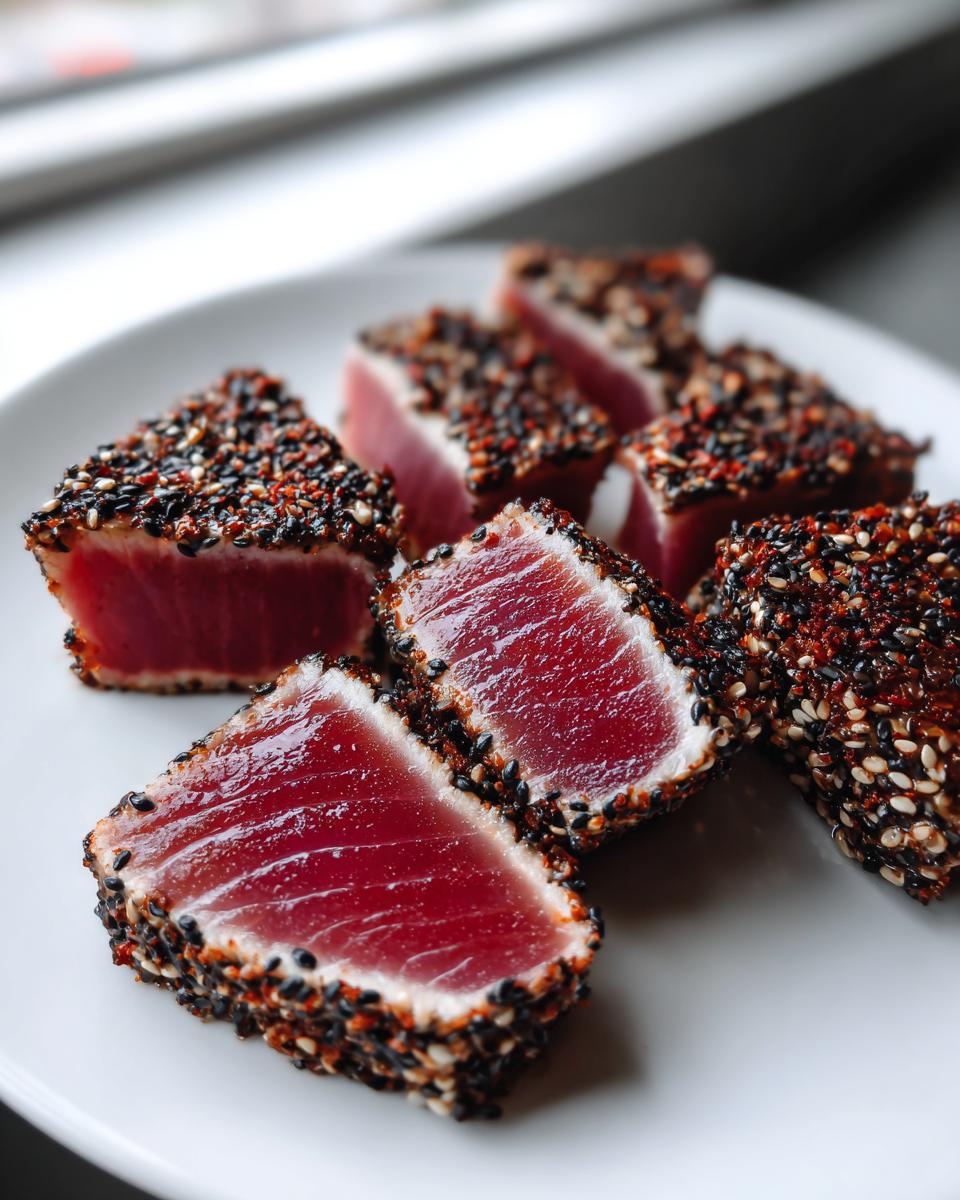
Okay, let’s talk about leftovers, because I have to be honest with you: this **Seared Ahi Tuna** recipe is truly best eaten the second you slice it. I developed it as a lightning-fast, **healthy dinner**, and that quick sear is what makes it sing! That thin, beautifully cooked crust protecting the raw center is magic when it’s fresh off the cutting board.
If you happen to have some leftover slices—maybe you made too much or just couldn’t finish it all—the best way to store it is simple: pop it straight into an airtight container and put it in the fridge. It will keep nicely for about a day, maybe two tops. You’ll notice the beautiful sesame seed crust gets a little soft once it’s chilled, but the fish itself should still be fine if you stored it properly.
Now, here is where I have to put my food scientist hat on and be very firm: **Do not reheat seared ahi tuna!** Seriously, don’t even try it. If you put those precious slices back into a hot pan or blast them in the microwave, you are going to ruin that perfect texture we worked so hard to achieve. That beautiful pink center will instantly cook and turn gray, and the whole steak will seize up and become tough and dry. It just doesn’t work well as a reheated dish, trust me on this one.
If you *must* use leftover tuna when you aren’t eating it raw (which I generally don’t recommend, but life happens!), the best way is to use it cold in a different context. Think about chopping the leftover pieces up and tossing them into a large, crisp salad the next day, perhaps drizzled with a little extra lime juice. Treat it more like a high-quality, slightly firm canned tuna than a hot entree. For the absolute best experience, though, just make sure you plan your portions right so you can enjoy every last bit immediately!
Frequently Asked Questions About Seared Ahi Tuna
I get so many questions after people try this recipe because it feels so fancy, but it’s secretly one of the easiest things you can make for a **healthy dinner**! When folks start experimenting with **sushi grade tuna**, they naturally have questions about sourcing and ingredient swaps. I totally get it; when you’re making something this quick, you want total confidence in your choices. Here are the top things I always hear when readers tackle this **Asian tuna recipe** for the first time.
Can I use frozen tuna steaks for this recipe?
This is a big one! Technically, yes, you can use previously frozen **yellowfin tuna**, but only if it was frozen at commercial freezing standards intended for raw consumption—meaning it was flash-frozen right after being caught to kill parasites. If you buy standard frozen tuna steaks intended for cooking (like you’d buy for baking or grilling), the texture upon thawing is usually ruined for searing. If you thaw it, it tends to release a ton of excess water, which means you can’t get that dry surface needed for a hard sear. My advice? Always buy fresh if you can. If you must thaw, place the steak in the fridge overnight and then pat it down aggressively with paper towels right before marinating. But honestly, for truly **gourmet tuna**, fresh is the only way to go.
What exactly is the difference between Ahi and standard tuna?
Ahi is actually the Hawaiian name for two types of tuna: Yellowfin and Bigeye. When you see “Ahi Tuna” on a menu or at the market, it generally refers to the very lean, firm, red-fleshed fish that holds up perfectly to a quick sear like ours. Standard tuna, like skipjack (which is often used for canning), has a much stronger flavor and a softer, flakier texture. You cannot use canned tuna for this recipe, obviously, but even fresh white tuna steaks you buy for grilling won’t achieve this same bright, clean flavor you get from true Ahi. It’s all about that high-quality cut!
I don’t have sesame oil. Can I substitute it with olive oil?
You *can* substitute the oil, but you will fundamentally change the identity of the dish! The recipe relies heavily on the nutty, toasty flavor of sesame oil to create that authentic **Asian tuna recipe** profile. If you substitute it with olive oil, you just end up with—well, fish marinated in garlic and ginger—which is fine, but it loses that signature crust flavor. If you absolutely cannot use sesame oil, try using a neutral oil like grapeseed or canola for the marinade base, and then add a *tiny* drizzle of toasted sesame oil right before you brush it on, just to get that aromatic depth back. If you’re interested in the larger world of seafood sourcing and eating responsibly, I found this interesting link about tuna sustainability that might be helpful!
Can I still get a good crust if I like my tuna cooked medium instead of rare?
Yes, absolutely! This is where my professional development experience really helps—it’s all about timing and heat management. If you prefer your **Seared Ahi Tuna** cooked a little more—say, medium, where it’s mostly cooked through with just a hint of warmth in the very center—you’ll need to increase your searing time slightly on each side. Instead of 60 to 90 seconds per side, try aiming for 2 full minutes per side. Because the steaks are so thick, this gives the heat time to penetrate deeper without completely overwhelming the exterior. Resist the urge to cook it for longer than 4 minutes total, though, or you’ll end up with dry fish!
Estimated Nutritional Data for This Healthy Dinner
Because I always want everyone to feel confident about what they’re eating when they make my recipes, I’ve worked up the approximate nutritional guide for this **Seared Ahi Tuna**. When dealing with quick recipes like this low-fat, high-protein gem, the numbers usually look fantastic, but remember that these figures are based on the exact ingredients and measurements listed in the recipe card above. So, if you use a giant steak or dump an extra tablespoon of sesame oil in the marinade, things will naturally shift a bit!
The great news is that this is truly a powerhouse meal. Look at that protein count! It’s a perfect choice when you’re looking for something substantial that still feels incredibly clean and light. It’s packed with nutrition without dragging you down.
Here is the breakdown for one steak serving, as specified (that’s half of the total recipe yield):
- Serving Size: 1 steak
- Calories: Approximately 250
- Protein: 32 grams (Wow! That’s incredible for such a fast meal!)
- Fat: 12 grams (Mostly the healthy fats from the sesame oil!)
- Saturated Fat: Only 2 grams!
- Carbohydrates: 3 grams (Practically zero sugar!)
- Sodium: 350 mg (This can vary based on how salty your soy sauce is, so watch that!)
See? High protein, surprisingly low fat, and very few carbs. This is why I love Asian tuna recipes so much; they feel indulgent but are fundamentally so good for you. This is one of those rare dishes where you get huge flavor payoff for minimal nutritional downsides.
Just a quick note, just like I mentioned earlier: these nutritional values are calculated estimates based on the inputs I tested with. If you use different brands of soy sauce or a thicker piece of tuna, your final results will vary slightly. But the general takeaway—that this is a fantastic, protein-heavy, low-carb healthy dinner option—holds true every time!
Share Your Perfect Seared Ahi Tuna Experience
Wow, you made it! I am so genuinely thrilled and excited for you that you took the plunge and made perfectly seared ahi tuna right in your own kitchen. Remember how scary that high heat sear seemed at first? I knew you could handle it! This entire goal of Frosted Fancies—making incredible food accessible—is only successful when you go out and create magic at home.
Now that you’ve experienced that fantastic texture and flavor, please don’t keep that success to yourself! I absolutely thrive on hearing your feedback. Did you manage to get that perfect 90-second sear on both sides? Did you try the wasabi mashed potatoes, or did you stick to a rice bowl?
Rate This Recipe and Tell Me What You Think!
The best way you can help me keep perfecting these recipes for everyone else is by leaving a star rating right down below. Every rating helps me understand what’s working like a charm and what might need a little clearer instruction next time around. Don’t be shy! Five stars if you loved it so much you want to eat it every day, or tell me what you’d tweak if you tried it again.
I also love reading your stories in the comments section. Did you serve this **gourmet tuna** for a special date night, or did you just enjoy a **quick seafood recipe** on a hectic Wednesday? Sharing those little wins makes all the hard work of testing recipes worth it!
Show Me Your Sear on Social Media!
If you snapped a picture of that gorgeous sesame crust contrast—the deep brown edge melting into that perfect pink center—I want to see it! Tag me on Instagram or Facebook when you share your plate. Seeing your beautiful results is seriously the highlight of my week. It proves that turning simple ingredients into something that brings joy to the table is achievable for everyone!
We’re all about building a community here where cooking is fun, not stressful. So go ahead, brag a little about your amazing **Seared Ahi Tuna**! Keep experimenting, keep tasting, and most importantly, keep cooking with love!
PrintPerfectly Seared Ahi Tuna Steaks
Learn to sear sushi-grade ahi tuna quickly for a flavorful, healthy dinner with an Asian-inspired crust.
- Prep Time: 10 min
- Cook Time: 3 min
- Total Time: 18 min
- Yield: 2 servings 1x
- Category: Dinner
- Method: Pan Searing
- Cuisine: Asian
- Diet: Low Fat
Ingredients
- 2 (6-ounce) sushi-grade ahi tuna steaks
- 2 tablespoons sesame oil
- 1 tablespoon soy sauce or tamari
- 1 teaspoon grated fresh ginger
- 1 clove garlic, minced
- 1/4 cup black and white sesame seeds (for crust)
- Pinch of salt
- Pinch of black pepper
Instructions
- Pat the tuna steaks completely dry using paper towels. This step helps create a good sear.
- In a small bowl, whisk together the sesame oil, soy sauce, ginger, and garlic. Brush this mixture evenly over all sides of the tuna steaks.
- Spread the sesame seeds on a plate. Press each side of the tuna steaks into the seeds until they are fully coated.
- Season the tuna lightly with salt and pepper.
- Heat a heavy-bottomed skillet, such as cast iron, over high heat until it is very hot, about 3 to 5 minutes. Do not add oil to the pan, as the marinade already contains oil.
- Carefully place the crusted tuna steaks in the hot, dry skillet. Sear for 60 to 90 seconds per side for rare to medium-rare. Adjust time slightly if you prefer more cooking.
- Remove the tuna from the skillet immediately. Let the steaks rest on a cutting board for 5 minutes before slicing against the grain into half-inch thick pieces.
Notes
- For best results, use yellowfin or bigeye tuna that is labeled sushi grade.
- If you prefer a slightly cooked center, you can sear for 2 minutes per side.
- Serve immediately with a side of steamed rice or a simple salad.
Nutrition
- Serving Size: 1 steak
- Calories: 250
- Sugar: 1
- Sodium: 350
- Fat: 12
- Saturated Fat: 2
- Unsaturated Fat: 10
- Trans Fat: 0
- Carbohydrates: 3
- Fiber: 1
- Protein: 32
- Cholesterol: 70